Kawaii Bubble: Bringing Warmth and Playfulness to Modern Digital Design
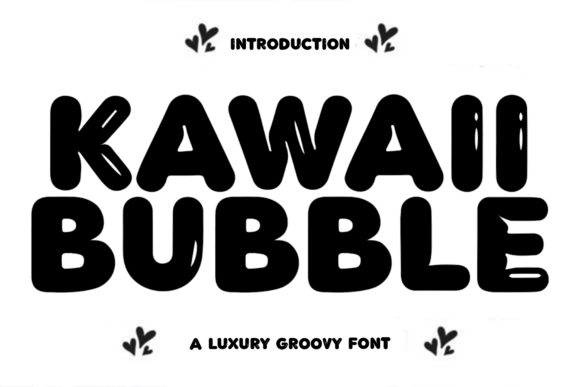
In an era where digital communication often feels sterile and automated, the visual tone of typography has never been more critical. Audiences are increasingly seeking authenticity, connection, and a sense of human touch in the content they consume. This shift has propelled hand-drawn typefaces from niche artistic circles into mainstream commercial and personal design. Among these, Kawaii Bubble stands out as a prime example of how typography can bridge the gap between professional polish and genuine warmth. It is a casual and creative font that exudes friendliness, utilizing round, playful strokes to create a relaxed atmosphere that rigid sans-serifs simply cannot replicate.
The relevance of this aesthetic extends far beyond mere decoration. For creators, marketers, and small business owners, selecting a typeface like Kawaii Bubble is a strategic decision. It signals approachability and lowers the psychological barrier between the brand or creator and their audience. Whether used for a wedding invitation, a social media announcement, or a product label, the charming, hand-drawn aesthetic adds a fun and unique touch that helps designs stand out in saturated feeds. Understanding why this style resonates—and how to implement it effectively—is essential for anyone looking to communicate with empathy and creativity in today’s visual landscape.
The Psychology of Roundness in Visual Communication
Typography is not just about legibility; it is about emotional resonance. Research in design psychology suggests that rounded shapes are perceived as safer, friendlier, and more comforting than sharp, angular forms. Kawaii Bubble leverages this principle by softening every curve and terminal. In a world dominated by high-tech minimalism and corporate rigidity, this softness acts as a visual palate cleanser. It aligns with the broader "soft life" and wellness trends that have permeated digital culture, where aesthetics prioritize comfort and mental ease over aggressive optimization.
This evolution in user preference explains why playful fonts are seeing a resurgence among adults aged 20 to 50. It is no longer viewed as childish; rather, it is interpreted as nostalgic, sincere, and human-centric. When a freelancer uses this typeface on a portfolio site, or an educator uses it in classroom materials, they are subconsciously communicating that their space is welcoming and judgment-free. The font’s ability to convey this specific emotional frequency makes it a powerful tool for community building, customer service communications, and lifestyle branding where trust is the primary currency.
Adapting to the Creator Economy Workflow
Modern design workflows have democratized creativity, shifting power from specialized agencies to individual creators and entrepreneurs. Tools like Canva, Adobe Illustrator, and CorelDRAW have made professional design accessible, but they also require assets that are versatile and easy to manipulate. Kawaii Bubble is specifically engineered for this ecosystem. Its compatibility with standard PUA Encoded glyphs means that users do not need advanced technical knowledge to access its full range of characters and alternates.
For the busy social media manager or the DIY bride, technical friction is the enemy of creativity. Fonts that require complex installation or obscure software features often get abandoned. By ensuring seamless integration across various application engines, Kawaii Bubble supports the rapid iteration required in modern content creation. A blogger can quickly swap out a header to test engagement, or a small business owner can customize packaging labels without hiring a typographer. This accessibility ensures that the warmth of the design is not lost to technical hurdles, allowing the creator’s vision to remain intact from concept to execution.
Practical Applications Across Industries
The versatility of a casual, hand-drawn font lies in its ability to adapt to diverse contexts while maintaining its core identity. While it is inherently playful, its application is surprisingly broad when paired correctly with other design elements. Understanding where and how to deploy this aesthetic is key to maximizing its impact without compromising professionalism.
- Social Media Graphics: In the fast-scrolling environment of Instagram and TikTok, text must capture attention instantly. The organic irregularity of Kawaii Bubble breaks the grid-like monotony of standard feeds. It performs exceptionally well for quotes, announcements, and behind-the-scenes content where a personal voice is paramount.
- Event Stationery and Invitations: Weddings, baby showers, and birthday parties thrive on intimacy. Printed matter sets the expectation for the event itself. Using a font that mimics handwriting suggests that the host has personally curated the experience, adding a layer of sentimental value that mass-produced templates lack.
- Product Packaging and Labeling: For artisans, bakers, and crafters, packaging is a storytelling medium. A hand-drawn typeface reinforces the "handmade" value proposition. It visually confirms to the consumer that the product was touched by human hands, justifying premium pricing and fostering brand loyalty.
- Educational and Children’s Content: Educators and content creators for younger audiences benefit from the font’s high legibility and non-threatening appearance. It reduces cognitive load for early readers and creates a positive association with learning materials.
- Personal Branding for Creatives: Photographers, illustrators, and writers often struggle to balance their artistic identity with commercial viability. This typeface offers a middle ground: it is distinctive enough to be memorable but clean enough to remain readable in bios, watermarks, and client deliverables.
Navigating Trends Without Losing Authenticity
Trends in typography move quickly, but the desire for human connection is a long-term shift rather than a fleeting fad. However, there is a risk of overuse. As playful fonts become popular, designers must be intentional to avoid cliché. The key to keeping Kawaii Bubble fresh lies in contrast and context. Pairing it with ample whitespace, minimalist photography, or structured grid layouts prevents the design from feeling chaotic or juvenile. The font should serve as an accent of warmth within a balanced composition, not the sole driver of the visual hierarchy.
Furthermore, authenticity requires consistency. If a brand uses this friendly typeface in its visuals but maintains a cold, bureaucratic tone in its copy, the dissonance will erode trust. The choice of Kawaii Bubble should be part of a holistic brand strategy that encompasses voice, color palette, and customer interaction. When the visual and verbal languages align, the result is a cohesive identity that feels genuinely approachable rather than performatively cute.
Technical Considerations for Seamless Integration
While the aesthetic appeal of Kawaii Bubble is immediate, its technical specifications determine its longevity in a designer’s toolkit. The inclusion of standard PUA (Private Use Area) encoded glyphs is a significant feature for professionals and hobbyists alike. These encoded characters allow access to special ligatures, swashes, and alternate letters that are not mapped to standard keyboard keys. In applications like Adobe Photoshop and Illustrator, these can be accessed via the Glyphs panel, enabling precise typographic control.
For users of platforms like Canva or Cricut Design Space, which may not have traditional glyph panels, PUA encoding allows these special characters to be copied and pasted directly from a character map utility. This cross-platform flexibility is crucial in a fragmented software landscape. It ensures that a design started on a desktop in CorelDRAW can be refined on a tablet in Procreate or finalized in a web-based tool without losing stylistic nuance. When evaluating fonts for long-term use, this level of interoperability is just as important as the visual design itself.
Fostering Connection in a Digital-First World
Ultimately, the enduring appeal of Kawaii Bubble speaks to a deeper need in our current cultural moment. As artificial intelligence and automation reshape how we work and interact, the imperfections of hand-drawn art become more valuable, not less. They serve as a reminder of human agency and creativity. For professionals and creators, using such tools is an act of differentiation. It declares that despite the efficiency of modern technology, there is still room for softness, play, and individual expression.
Whether you are designing a personal project, launching a new product line, or simply trying to make your social media presence feel more authentic, the right typography lays the foundation. Kawaii Bubble offers a practical, accessible, and emotionally resonant solution for those who understand that good design is not just seen—it is felt. By integrating this warm, friendly aesthetic into your workflow, you are not just choosing a font; you are choosing to communicate with kindness in a complex digital world.